


 Friday,Mar 06, 2026
Hypothyroidism in Infants and Children
Hypothyroidism can occur in infants and children, though it is relatively rare. If treated within the first month, children will grow and develop normally. In infants, untreated hypothyroidism can cause brain damage, leading to intellectual disability and developmental delays.
If hypothyroidism occurs after age 3, intellectual disability is usually not present. However, untreated hypothyroidism in children often delays growth and sexual development, and may also delay puberty.

Hypothyroidism in Adults
Adult hypothyroidism leads to a gradual loss of thyroid function. Symptoms may appear slowly and are very mild, so much so that they may go unnoticed for years. However, symptoms usually worsen gradually, and other health problems arise as the condition progresses. Without treatment, hypothyroidism may cause:
• Myxedema, which can cause tissue swelling, pericardial effusion, pleural effusion, ascites, slowed muscle reflexes, and slowed thinking.
• Myxedema coma is a rare but life-threatening condition that can occur in patients with long-term, significantly worsening hypothyroidism. It is commonly seen in elderly patients with severe hypothyroidism who also have other medical conditions, are exposed to cold, or are taking painkillers or sleeping pills. Symptoms include mental decline, such as apathy, confusion, and mental abnormalities. Loss of consciousness (coma) and hypothermia, bradycardia (less than 60 beats/min), heart failure, and dyspnea may also occur.
• Complications of hypothyroidism, such as:
o Elevated cholesterol and triglyceride levels
o Pericardial effusion
o Sleep apnea, with breathing stopping for 10 seconds or longer.
o Amnesia and dementia.
In patients with mild (subclinical) hypothyroidism, blood tests show only mild abnormalities, and there are often no significant symptoms or health problems. Thyroid function may return to normal in some patients with mild hypothyroidism.
If the thyroid gland is surgically removed, hypothyroidism will develop within weeks. Hypothyroidism can develop within a year of receiving radioactive iodine therapy; therefore, patients receiving radioactive iodine therapy need regular thyroid function monitoring. In these cases, thyroid function usually does not recover, and thyroid hormone medication is required thereafter.

Hypothyroidism during and after pregnancy
Women with pre-existing hypothyroidism or mild hypothyroidism may experience more severe hypothyroidism during pregnancy. Without treatment, pregnant women with hypothyroidism can develop preeclampsia and premature birth. Infants born to untreated women with hypothyroidism during pregnancy are at risk of hypothyroidism and low birth weight, and may score lower on intelligence tests than infants born to healthy mothers.
Postpartum, women may develop a thyroid abnormality called postpartum thyroiditis, which occurs in about 5% of women without a history of thyroid disease. Postpartum thyroiditis is often misdiagnosed as depression.
Women with postpartum thyroiditis usually develop hypothyroidism 3 to 6 months after delivery. Hypothyroidism may persist for several months. Sometimes it occurs after the initial episode of postpartum thyroiditis and causes symptoms of excessive thyroid hormones. For women with postpartum thyroiditis, hypothyroidism may be permanent. Even if thyroid function returns to normal, postpartum thyroiditis often recurs in the next pregnancy.
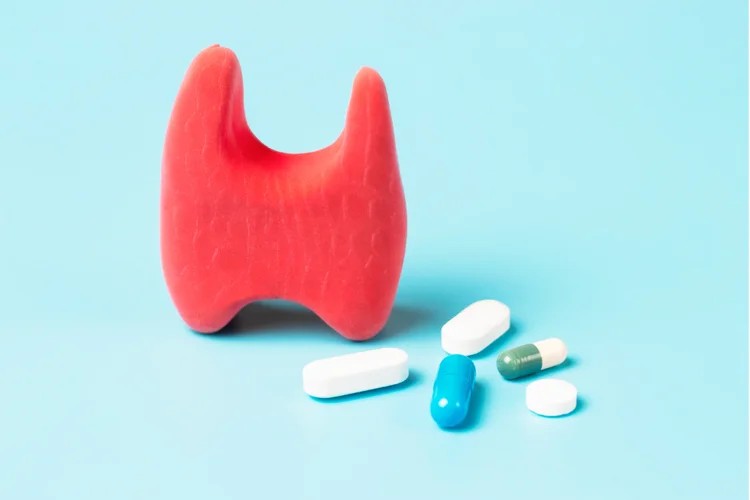
(1).Levothyroxine is a s synthetic (man-made) medcine to treat hypothyrodism, it only contains T4(thyroxine).
(2).Natural thyroid powder, also known as desiccated thyroid extract(DTE) Mostly extracted from porcine source, contains both T3 and T4,it was applied to treat hypothyroidism from 1900s, natural thyroid is easily absorbed by human body and have less side effects compared to synthetic drugs.