Sodium metabisulfite 95%-99% Na2S2O5 Factory price
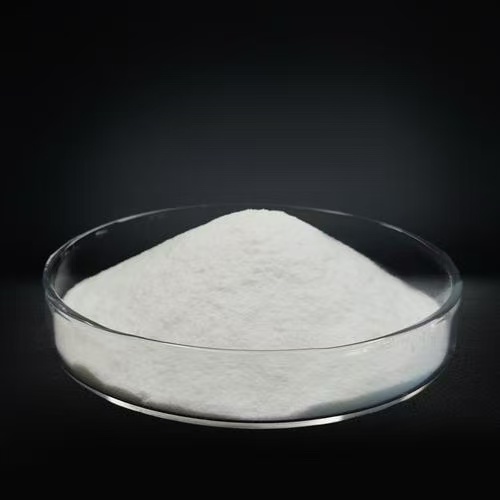
Sodium metabisulfite 95%-99%
Description
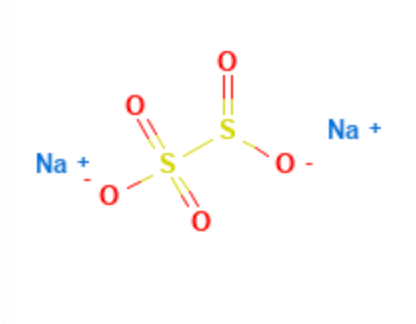
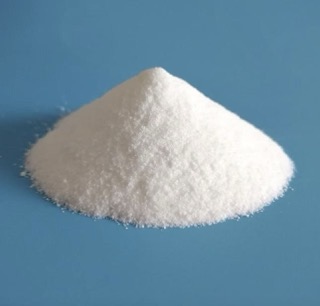
Sodium metabisulfite is also known as sodium pyrosulfite,it is white to yellowish crystalline or powder with sulfuric odor with the formula Na₂S₂O₅ and a molecular weight of 190.10 g/mol. It is used as the antioxidant,disinfectant,preservative agent and bleaching agent,it is also an antimicrobial and enzyme inhibitor, which can be found under the European food additive code E223.
Application
Wine industry/
Cosmetics preservative/
Mineral extraction/
Bleaching agent/
Disinfectant/
Rubber manufacturing/
Local anesthesia preparations/
Industries/
Pharmaceutical industry
Package
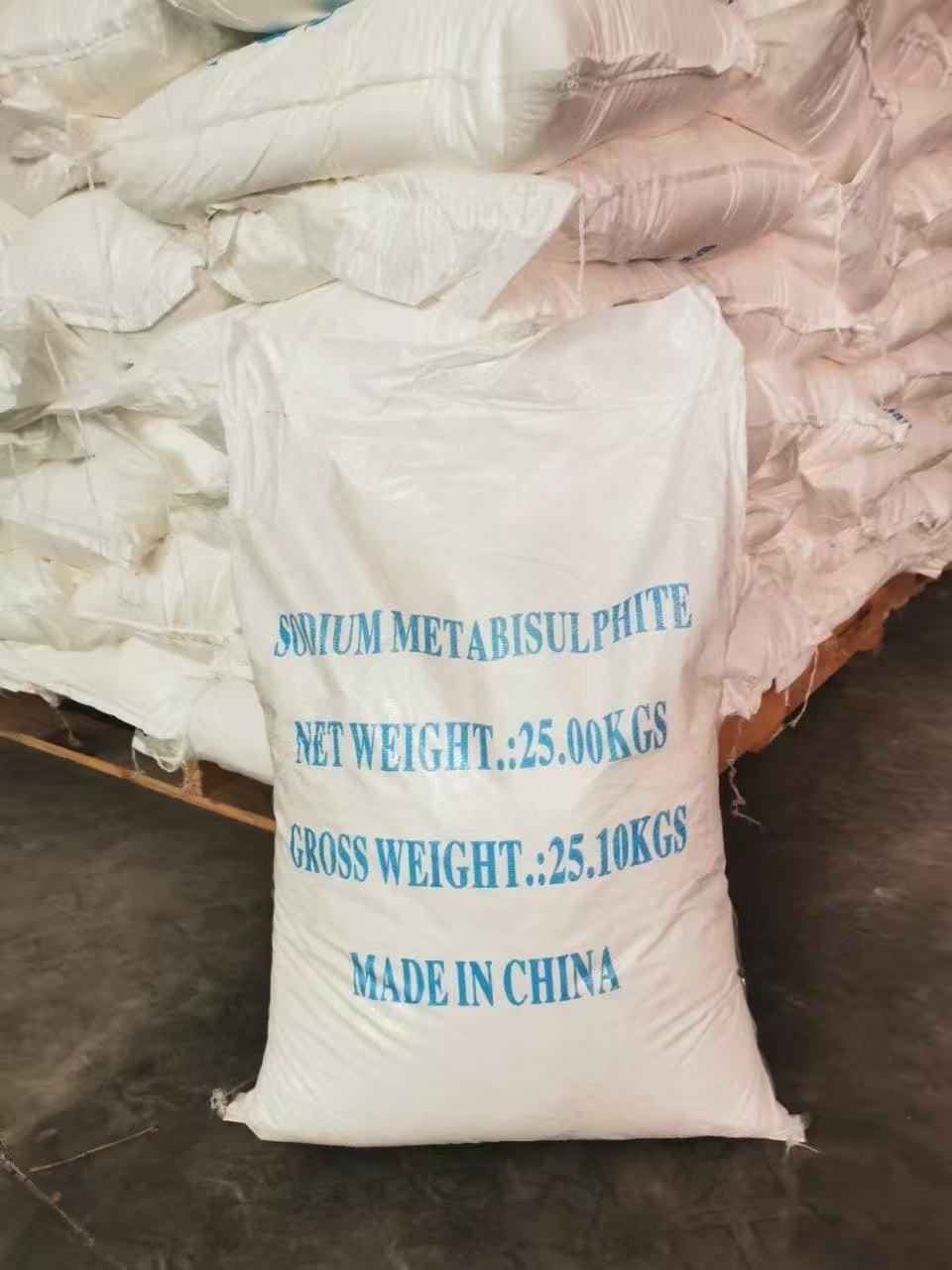
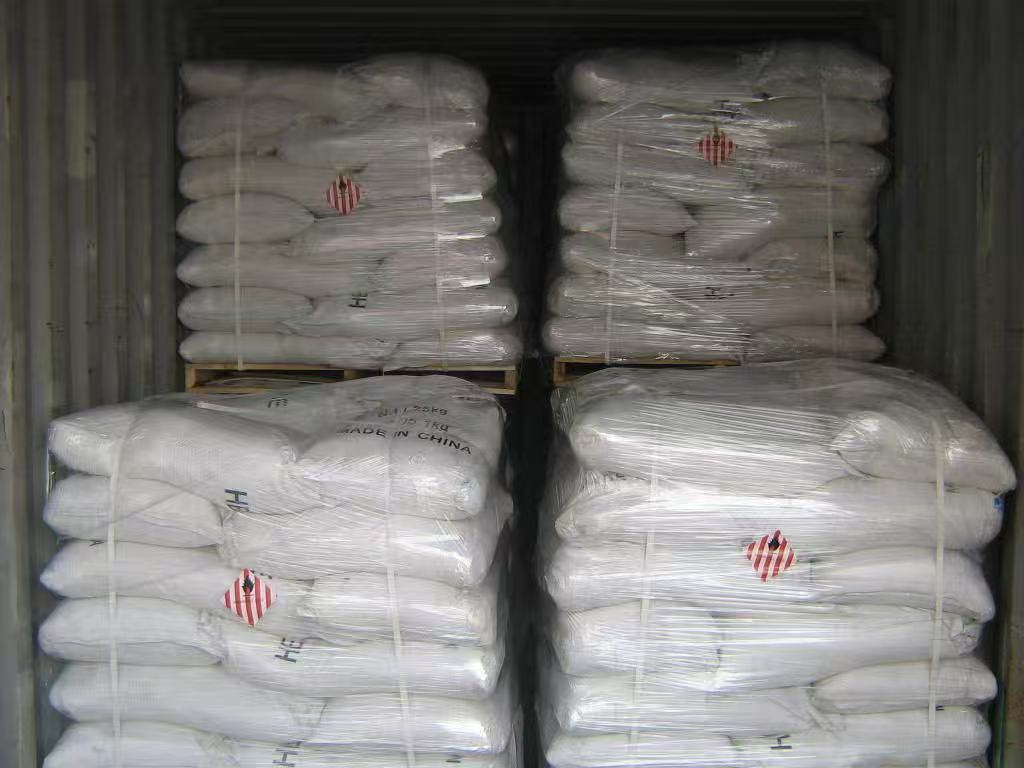
25kg/bag;
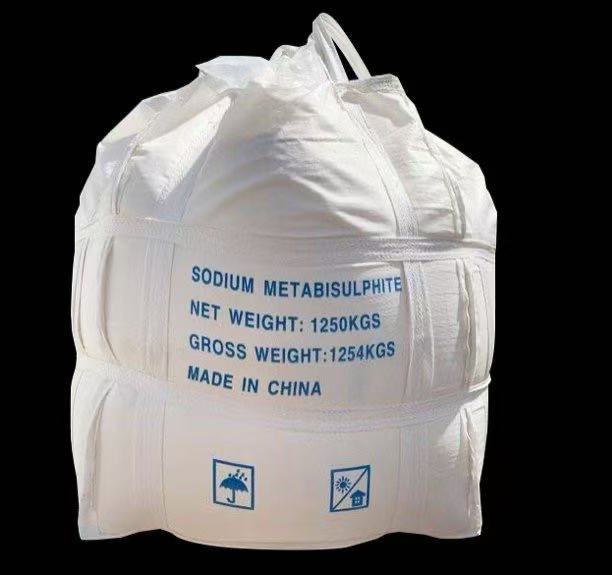
1250kg/ton bag
Specifications
95%-99%,Food grade/ Industrial grade/ Pharmaceutical grade
How to assay sodium metabisulfite?
Thiosulfate
Take 1.1g of this product, slowly add 10ml of dilute hydrochloric acid, dissolve, heat in a water bath for 10 minutes, cool, transfer to a colorimetric tube, add water to 20ml. If turbidity is observed, the solution should not be more concentrated (0.2%) than the control solution prepared by the same method with 0.20ml of sodium thiosulfate titrant (0.1mol/L).
Iron Salt
Take 1.0g of this product, add 5ml of water and 2ml of hydrochloric acid to dissolve, evaporate to dryness in a water bath, add 15ml of water and 2ml of hydrochloric acid to the residue, dissolve, add an appropriate amount of bromine test solution to make the solution slightly yellow, heat to remove excess bromine, cool, add water to 25ml, and test according to the method. The solution should not be more dark (0.002%) than the control solution prepared with 2.0ml of standard iron solution.
Heavy Metals
Dissolve 1.0 g of this product in 10 ml of water, add 5 ml of hydrochloric acid, evaporate to dryness on a water bath, add 15 ml of water to the residue, boil gently for 2 minutes, filter, add an appropriate amount of bromine test solution to the filtrate to clarify, heat to remove excess bromine, cool, add 1 drop of phenolphthalein indicator and an appropriate amount of ammonia test solution until the solution turns pink, add 2 ml of acetate buffer (pH 3.5) and an appropriate amount of water to make 25 ml, and test according to the method. The heavy metal content should not exceed 20 parts per million.
Arsenic Salts
Dissolve 1.0 g of this product in 4 ml of water, add 3 ml of nitric acid, evaporate to dryness on a water bath, add a few ml of water to the residue, stir well, filter, wash the residue with water, combine the washings and filtrate, evaporate to dryness, add 5 ml of hydrochloric acid and 23 ml of water, dissolve, and test according to the method. It should meet the requirements (0.0002%).
Sodium metabisulfite chemical properties and stability:
1. Easily decomposes when exposed to moisture; readily oxidizes to sodium sulfate when exposed to air. It is irritating.
2. Releases sulfur dioxide and forms corresponding salts upon contact with strong acids. Decomposes at 150℃. A white powder with a strong SO2 odor; loses SO2 and absorbs O2 in the air to transform into Na2SO4. Easily soluble in water; the aqueous solution is acidic. When heated above 65℃, it decomposes into Na2SO3 and SO2.
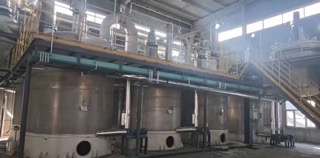
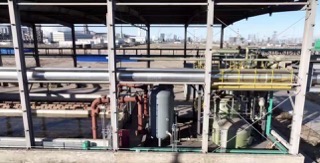
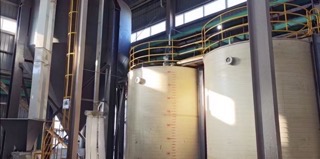
The production processes of sodium metabisulfite mainly include two types: dry and wet processes:
Dry process: Soda ash (sodium carbonate) is mixed with water in a certain proportion to form sodium carbonate hydrate. Sulfur dioxide is then introduced to react and produce sodium metabisulfite.
Wet process: Sulfur dioxide is introduced into a sodium carbonate solution. After multiple steps of reaction, sodium metabisulfite crystals are formed. Finally, the product is obtained by centrifugation and drying.
We gurantee to provide more competetive bulk FACTORY price than others in China, please contact us for more...